Objects with character. Advice for everyday life.
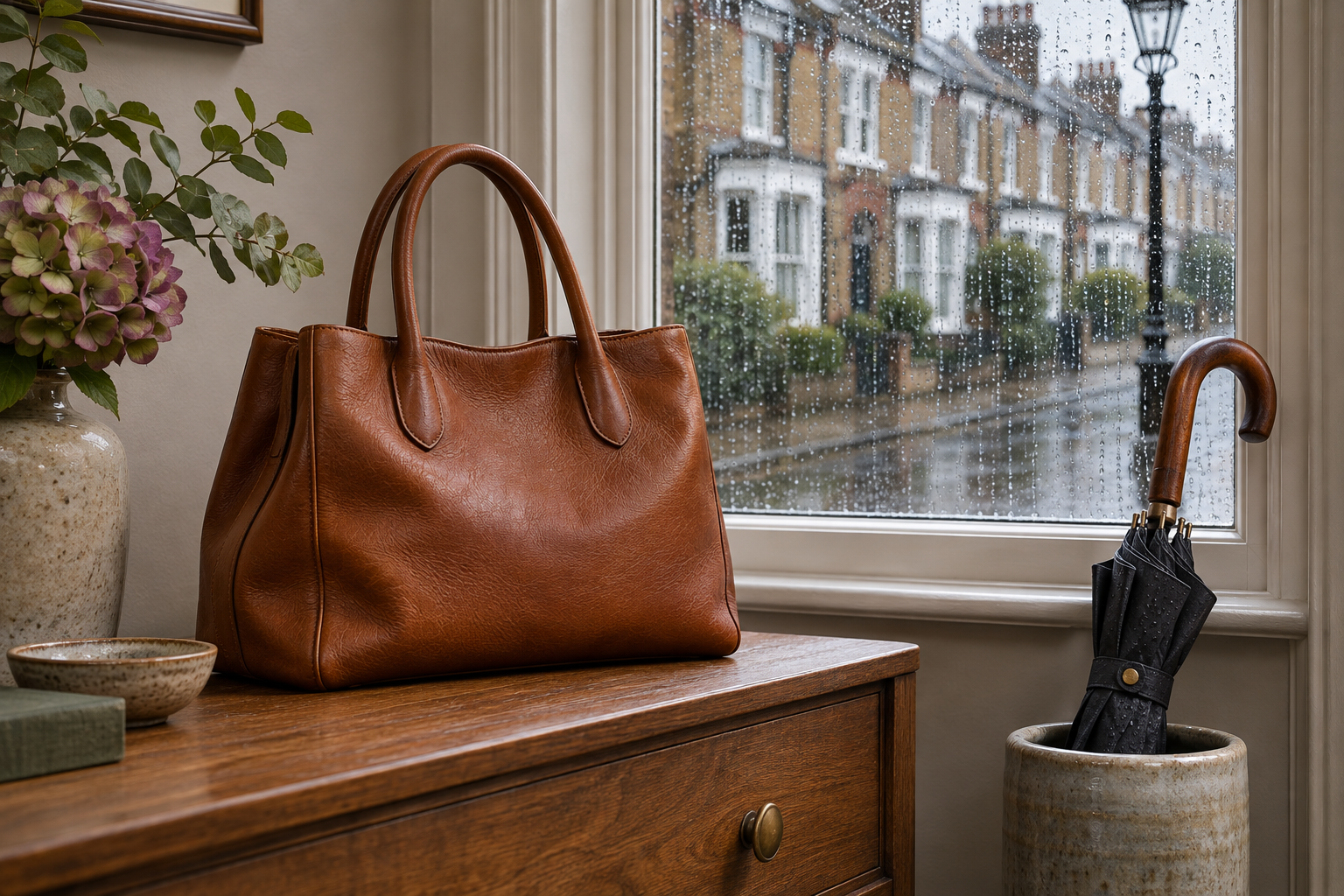
A leather bag in British rain
A practical guide to carrying leather through changeable British weather, from choosing a rain plan to checking the bag when you get home.
THE WEATHER JOURNAL · UNITED KINGDOM
A British forecast can turn an ordinary journey into a sequence of dry platforms, wet pavements and crowded doorways. A leather bag can belong in that routine, provided you plan around its particular finish and understand that water resistance is never something to assume from appearance alone.
Start with the leather you actually own
Smooth, coated, suede and nubuck surfaces do not respond to water in identical ways. Read the maker’s instructions before buying a spray or attempting a treatment. A polished surface may feel reassuring yet still have vulnerable edges, stitching and openings. Check whether the manufacturer recommends a particular protector; if permission is unclear, ask before experimenting. A hidden test should be genuinely inconspicuous and allowed to dry fully before judging colour or texture.
Build a rain plan around the journey
Think about the exposed part of the trip, rather than simply the distance from home to work. A short walk between a station and an office can become a long wait outside a locked entrance. Keep a clean, lightweight cover accessible, close the bag before leaving shelter and place sensitive belongings inside separate sleeves. A cover should shield the leather while travelling; it should not become a sealed storage environment after you arrive.
| Part of the day | Practical response |
|---|---|
| Brief shower | Close openings and use an umbrella or appropriate cover. |
| Long outdoor wait | Move the bag under shelter; reduce continued exposure. |
| Arrival indoors | Uncover, inspect and allow air to circulate. |
Protect the contents without overloading
A laptop sleeve, a compact umbrella and a pouch for small essentials make the bag easier to manage in a sudden shower. The important detail is separation: a dripping umbrella should not share a compartment with unprotected leather or electronics. Use a suitable waterproof umbrella sleeve or carry it separately until dry. Avoid packing so tightly that the zip strains, because an overfilled opening is harder to close quickly when the weather changes.
An example: station to office
Before leaving the station, move your access card into an easy pocket, close the main compartment and cover the bag. You can then enter the office without searching through an open bag in the rain.
A small evening check
Once the bag is dry, inspect edges and the underside in good light. Note any new change before applying a product: this makes it easier to distinguish ordinary patina from a developing problem.
Make the arrival routine deliberate
At your destination, take the bag out of its rain cover, check the base and handles and gently blot visible moisture with a clean, soft cloth. Do not rub marks aggressively or apply a conditioner to an actively wet surface. Let the bag rest in a ventilated room away from direct heat. If it is wet inside, remove the contents and follow the maker’s drying guidance. Persistent staining or changes in texture deserve professional advice before further treatment.
Questions before the next shower
Should I spray a new bag immediately?
Only if its maker recommends a product suitable for that exact finish. Test as directed and respect the drying time before use; applying more does not establish waterproofness.
What if the forecast promises heavy rain all day?
Choose a suitable protective cover, shorten exposed sections where possible, or use luggage designed for those conditions. Matching the bag to the day is sensible care, not a compromise in style.